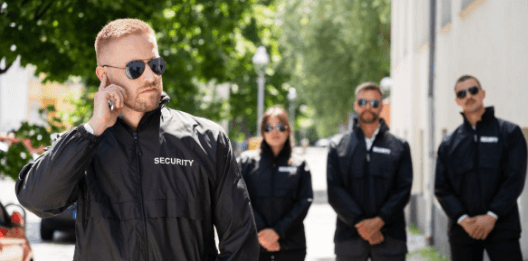
More Than a Presence: How Personal Security Companies Are Becoming Long-Term Safety Partners in Australia

There was a time when security was something you called after something happened.
A break-in. An incident. A confrontation. A complaint. You reacted. Someone turned up. The problem got handled. Then things went back to normal.
That model doesn’t fit modern Australia very well anymore.
Public spaces are busier. Businesses operate longer hours. Residential developments are denser. Events are larger. Workplaces are more complex. Expectations around safety are higher. And risk looks different from what it did twenty years ago.
That’s why personal security companies are increasingly stepping into long-term partnership roles rather than one-off response roles.
Not as uniforms at doors.
As ongoing risk support.
Why “Just Having A Guard” No Longer Covers It
People often picture security as a physical presence. Someone standing near an entrance. Someone walking a site. Someone responding when called.
But professional personal security companies now operate much wider than that image. They assess sites. Study behaviour patterns. Review access flow. Identify pressure points. Track incident data. Work with management teams. Adjust coverage as environments change.
Security today is less about stopping a single problem and more about shaping an environment so fewer problems develop in the first place.
That shift has turned security from a reactive cost into a strategic service.
See also: Under the Surface: Why Concrete Sealing in Melbourne Has Become a Quiet Property Essential
Where Australian Demand Is Really Coming From
Australia’s growth has been uneven. High-density living. Large mixed-use developments. Regional infrastructure expansion. Major events. Extended retail trading. Night-time economies.
All of these environments bring people together in ways that didn’t exist at the same scale before.
Professional Personal Security Companies are now working inside corporate offices, transport hubs, residential communities, construction zones, shopping centres, entertainment venues, and public facilities.
Each setting brings different pressures. Crowd movement. Alcohol exposure. Asset protection. Workplace conflict. Compliance obligations. Duty of care.
Security planning has to respond to all of it.
The Quiet Shift From Response To Prevention
One of the biggest changes in how personal security companies operate is how much work happens before anything happens.
Risk assessments. Site audits. Staff briefings. Entry management planning. Emergency response mapping. Visibility placement. Patrol scheduling.
Good providers don’t wait for incident reports. They actively look for vulnerabilities. Poor lighting. Unclear access points. Blind spots. Uncontrolled after-hours activity. Inconsistent procedures.
They also look at human behaviour. Where people gather. Where tension builds. Where confusion happens. Where conflict escalates.
Preventive security is largely invisible. And that’s its success.
Why Businesses Are Driving Long-Term Security Partnerships
For Australian businesses, security now touches reputation, compliance, staff well-being, and customer experience.
An incident isn’t just an operational issue. It’s a brand issue. A legal issue. A morale issue.
That’s why many organisations are moving away from casual coverage and toward structured agreements with personal security companies. Ongoing site knowledge. Consistent personnel. Regular reviews. Integrated reporting. Coordinated response protocols.
These partnerships allow security providers to understand business rhythms. Shift changes. Seasonal spikes. Event cycles. Vulnerable periods.
That context dramatically improves outcomes.
What Professional Services Actually Look Like Today
Modern personal security companies rarely sell “guards.” They deliver layered services.
Static and mobile coverage. Concierge-style front-of-house support. Construction site protection. Event management. Corporate protection. Residential community patrols. Asset protection. Emergency response coordination.
Alongside this comes reporting systems, incident tracking, staff training support, and management liaison.
The service becomes embedded.
Security teams communicate with building managers. HR departments. Event planners. Operations staff. Local authorities. Emergency services.
The role is not isolated. It’s integrated.
Why People Skills Now Matter As Much As Physical Presence
Security work is increasingly interpersonal.
De-escalation. Customer interaction. Mental health awareness. Conflict management. Cultural sensitivity. Professional communication.
Australian sites don’t just need control. They need judgment.
Professional Personal Security Companies invest heavily in training for exactly this reason. Because many incidents are resolved through conversation long before they become confrontations.
The ability to read situations, manage emotions, and guide behaviour has become one of the most valuable tools in modern security services.
And clients notice.
They don’t remember how many patrols happened. They remember how situations were handled.
Residential And Community Environments Are Changing The Brief
High-density living has introduced new security challenges.
Shared spaces. Visitor management. Package theft. After-hours movement. Noise disputes. Parking conflicts. Vulnerable residents. Mental health incidents.
Professional Personal Security Companies working with residential complexes now operate as community safety support. They liaise with property managers, strata bodies, and residents. They respond to a wide range of non-criminal situations. They manage behaviour, not just access.
This requires a softer skill set paired with clear authority.
And it reinforces the shift toward long-term service relationships rather than reactive call-outs.
Events Have Reshaped Expectations Entirely
Australia hosts everything from small community festivals to major international events.
Event environments compress risk. Large crowds. Alcohol. High emotion. Tight timeframes. Media presence.
Here, personal security companies operate months before gates open. Planning crowd flows. Designing entry points. Coordinating emergency pathways. Training staff. Running simulations.
On event days, security becomes orchestration. Movement management. Communication hubs. Rapid response coordination. Stakeholder liaison.
And once again, the visible presence is only the final layer of a much larger service.
Choosing A Security Company Now Means Choosing A Partner
Organisations selecting Personal Security Companies today look far beyond licences and uniforms.
They assess experience across environments. Management capability. Training frameworks. Reporting systems. Communication standards. Stability of personnel. Ethical practices.
They want providers who understand business continuity, not just site coverage.
Who can scale? Adapt. Review. Improve.
Who can sit at planning tables, not just stand at doors?
That’s the new benchmark.
Where The Australian Security Sector Is Heading
Security services in Australia are professionalising quickly.
More integration with risk management. More collaboration with health and safety. More involvement in workplace well-being. More emphasis on prevention. More data-driven deployment. More cross-sector coordination.
In this environment, personal security companies like Velox Security are no longer peripheral service providers. They are operational partners.
They influence how spaces are designed. How events are structured. How buildings operate. How communities function.
And as environments become more complex, that role will only expand.
Because modern safety is not about reacting to isolated moments.
It’s about shaping everyday conditions.
And that’s where professional security services now do their most important work.