Affordable Radon Mitigation Options in Ottawa

Radon is a serious health concern in Ottawa, where many neighbourhoods consistently test above Health Canada’s radon guideline of 200 Bq/m³. Because radon is the second leading cause of lung cancer in Canada — and the leading cause among non-smokers — mitigating high radon levels is essential. But for many homeowners, cost is a major concern.
The good news is that radon mitigation does not have to be expensive. There are multiple affordable solutions that dramatically reduce radon levels without compromising safety or long-term performance.
This guide explains cost-effective radon mitigation options, how to choose the right one for your
home, and how to save money while still getting a high-quality radon removal system.
Why Radon Mitigation Matters in Ottawa
Ottawa’s geology, climate, and construction styles create ideal conditions for radon accumulation. Long winters mean homes remain closed for months at a time. Older basements often have cracks or gaps, and many newer homes are built airtight for energy efficiency. These factors trap radon gas indoors.
Even worse, radon levels vary house by house. Two identical homes on the same street can have very different readings. That’s why mitigation — not just testing — is crucial when levels exceed guidelines.
But you don’t need a luxury-priced system. Many Ottawa homeowners achieve excellent radon reduction on a reasonable budget, especially when working with a certified local mitigation company like Ottawa Radon Pros.
How Much Does Radon Mitigation Cost in Ottawa?
Before discussing affordable options, it’s important to understand the typical pricing landscape.
Standard Professional Radon Mitigation Cost in Ottawa (2025)
- Average range: $2,500 – $3,500
- Complex homes: $3,500 – $5,000
- Crawlspace encapsulation: $3,800 – $7,000
But many homes do not need a high-end system. There are budget-friendly systems and approaches that still deliver safe, reliable results.
Affordable Radon Mitigation Options for Ottawa Homes
Below are the most effective low-cost or cost-optimized radon mitigation solutions available in 2025.
1. Basic Sub-Slab Depressurization (SSD) System — The Most Affordable Full Solution
A standard Sub-Slab Depressurization system is universally recognized as the most effective and reliable radon mitigation method. Fortunately, it can also be very affordable when designed efficiently.
Average low-end price in Ottawa:
➡ $2,200 – $2,800
A basic SSD system includes:
- One suction point under the slab
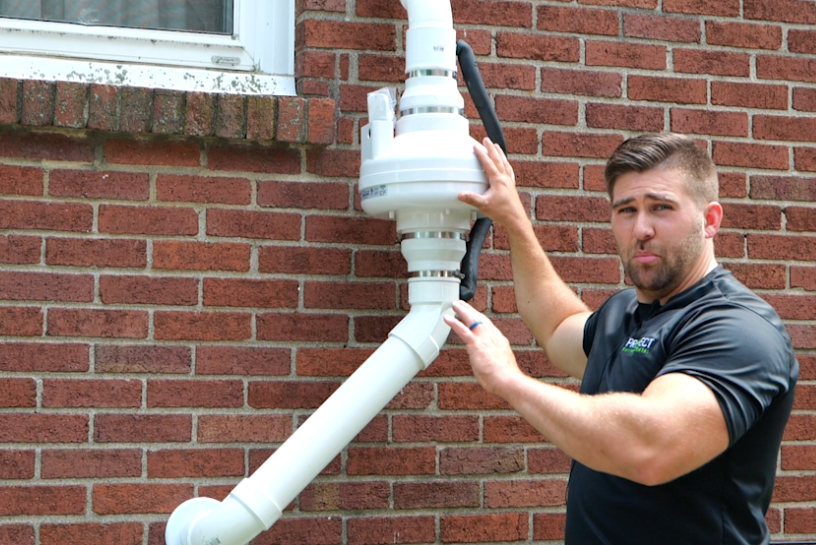
- PVC radon piping (often routed externally to reduce cost)
- A radon-rated fan
- Proper sealing of cracks and plumbing penetrations
- A manometer to monitor system performance
Most Ottawa homes require only one suction point, making this the best budget-friendly choice without reducing performance.
Why It’s Affordable
- Minimal materials
- Fast installation (4–6 hours)
- Highly effective even in older homes
- Long lifespan (fans last 8–12 years)
For homeowners looking for the best value, this system offers maximum protection at the lowest cost.
2. Exterior Radon Mitigation vs. Interior Routing
How the mitigation system is routed can greatly influence cost.
Interior routing (through closets, mechanical rooms, or walls):
- More labour
- More materials
- More structural work
- Higher cost
Exterior routing (up the outside wall):
- Simpler installation
- Lower labour time
- Ideal for tight budgets
Savings:
➡ Homeowners often save $300–$700 by choosing exterior vent routing.
Exterior systems are just as effective and long-lasting, making them an excellent budget-conscious choice.
3. Sump-Pump Depressurization (If Your Home Has a Sump Pit)
If your Ottawa home has a sump pit, it can often be used as a radon suction point — which significantly reduces installation time and material costs.
Average cost:
➡ $1,800 – $2,50
Why it’s affordable:
- No need to drill a new suction point
- Excellent sub-slab communication through existing drainage
- Minimal disturbance to the basement
Requirements:
- Airtight sump lid
- Proper sealing
- Radon-rated fan connected to the sump
This is one of the cheapest full mitigation solutions, as long as your drainage system is compatible.
4. Sealing Cracks and Openings (Low-Cost Supplementary Option)
While sealing alone will not solve a radon problem, it can significantly improve the performance of an SSD system and reduce fan size requirements.
Average sealing cost:
➡ $150 – $600
Sealing includes:
- Foundation cracks
- Wall-floor joints
- Pipe penetrations
- Sump lids
- Floor drains (with radon traps)
Benefits:
- Enhances suction efficiency
- Reduces radon entry points
- Helps achieve lower readings with a smaller system
- Low cost compared to other home improvements
This option is affordable and effective, especially when combined with an SSD system.
5. Passive Radon Mitigation Systems Upgraded to Active Systems
Newer homes built with rough-in radon pipes offer a major cost advantage. A passive system becomes fully effective with the simple addition of a radon fan.
Cost to upgrade:
➡ $1,000 – $1,800
What’s included:
- Radon fan installation
- Vent sealing
- System diagnostics
- Exterior weatherproofing
If your Ottawa home was built after 2012, you may already have a rough-in pipe ready to use — saving $1,000+ in labour.
See also: How Much to Set Aside for Preparing Your Home Makeover
6. Crawlspace Sub-Membrane Depressurization (Economy Version)
Homes in certain Ottawa neighbourhoods (especially rural and older downtown homes) may have crawlspaces. Full encapsulation can be costly, but budget-friendly alternatives exist.
Affordable version includes:
- Heavy-duty vapour barrier on the soil
- Sealed seams and edges
- One suction point beneath the membrane
- Exterior venting
Average cost:
➡ $2,500 – $3,200
(Compared to $4,500+ for a full premium encapsulation.)
This option still effectively reduces radon by creating a sealed sub-membrane environment that can be depressurized.
7. Radon Fans With Low Energy Consumption
A major hidden cost of radon mitigation is electricity usage.
High-efficiency radon fans:
- Use as little as 30–60 watts
- Cost $30–$90 per year to operate
- Run silently
- Reduce long-term expenses
Choosing a lower-wattage fan can save money every single year, making mitigation more affordable in the long run.
8. Low-Cost Continuous Radon Monitoring
Once mitigation is complete, homeowners must check radon levels periodically. Hiring professionals for each test adds cost, but affordable monitoring devices can save money.
Budget-friendly devices:
➡ $150 – $350
These devices:
- Provide real-time radon readings
- Help monitor system performance
- Reduce the need for repeated professional testing
They are ideal for cost-conscious homeowners wanting ongoing radon visibility.
How to Make Radon Mitigation Even More Affordable in Ottawa
Beyond selecting low-cost options, Ottawa homeowners can reduce costs with smart planning.
1. Bundle Testing and Mitigation with the Same Company
Many radon companies (including Ottawa Radon Pros) offer discounts when:
- You purchase a long-term radon test
- Then proceed with mitigation using the same provider
This can save $100–$300.
2. Choose Exterior Installation
Interior routing looks great, but exterior vent installations reduce labour and save between $300–$700.
3. Use an Existing Sump Pit When Possible
If your sump pit is located ideally, it could reduce system cost by $300–$500.
4. Schedule Mitigation Outside Peak Season
Ottawa’s radon testing and mitigation peak is October through April. Off-season discounts may be available from May to September.
5. Avoid Overpriced Systems or Unnecessary Add-Ons
Some companies upsell:
- Oversized fans
- Multiple suction points that aren’t needed
- Unnecessary monitoring equipment
- Decorative covers or premium venting
A reputable radon expert will recommend only what your home truly needs.
Which Affordable Option Is Right for You?
Choosing the right mitigation system depends on:
- Your radon level
- Your foundation type
- Your home’s age
- Your budget
- Sub-slab soil composition
- Whether you have a sump pump
- Crawlspace architecture
- Existing radon rough-ins
Below is a quick selection guide:
Under 300 Bq/m³:
- Basic SSD system
- Sump depressurization if applicable
- Fan upgrade for passive rough-ins
- Foundation sealing to support system efficiency
300–800 Bq/m³:
- Basic SSD with optimized suction pit
- Crawlspace depressurization if needed
- Strong sealing to improve airflow
Above 800 Bq/m³:
- High-efficiency SSD system
- Multiple suction points (if diagnostics indicate poor sub-slab movement)
- Crawlspace membrane systems
Even at higher levels, mitigation still does not need to be extremely expensive — it just needs to be properly designed.
Why Affordable Does NOT Mean Low Quality
A common misconception is that budget radon mitigation means:
- Cheaper materials
- Ineffective systems
- Short lifespan
- Loud fans
- Limited reduction
This is simply not true.
Even affordable systems can:
✔ Reduce radon by 90–99%
✔ Last over a decade
✔ Meet all Health Canada guidelines
✔ Operate quietly and efficiently
✔ Maintain consistent low readings
The real determining factors are:
- Quality of installation
- Proper system design
- Correct fan sizing
- Good sealing
- Diagnostic testing when needed
That’s why choosing a certified professional, even for a budget system, is critical.