Airwaves in the Sky: How Pilots and Controllers Stay Connected

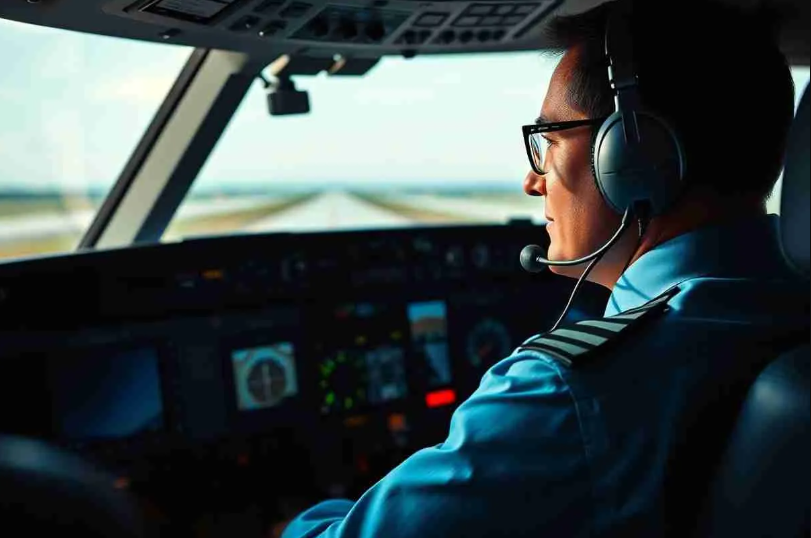
Clear, reliable communication is the heartbeat of modern aviation. Every smooth takeoff, steady cruise, and safe landing depends on the constant exchange of information between pilots and air traffic controllers (ATC). While passengers may only hear a brief announcement from the cockpit, an intricate network of systems and protocols works behind the scenes to keep aircraft connected and the skies orderly. Understanding how these communication systems function reveals just how essential they are to aviation safety and efficiency.
The Foundations of Aviation Communication
At the core of aviation communication is VHF (Very High Frequency) radio, the standard tool for voice communication between aircraft and ATC during most phases of flight. Operating between 118 and 137 MHz, VHF radios deliver clarity over relatively long distances, making them ideal for the busy airspace surrounding airports and en-route sectors. Pilots tune into specific frequencies depending on where they are—ground, tower, departure, center, approach—ensuring they always have a direct line to the right controller.
For flights at higher altitudes or over remote areas where VHF coverage fades, HF (High Frequency) radio takes over. HF signals can bounce off the ionosphere, covering thousands of miles. This capability is especially important for transoceanic flights, where controllers rely on HF communication to track aircraft far from land-based radar. Although HF can be less reliable due to atmospheric interference, it remains a vital part of global aviation connectivity.
Digital Communication Takes Flight
As air traffic grows, so does the need for more efficient communication. That’s where data link systems like ACARS (Aircraft Communications Addressing and Reporting System) and CPDLC (Controller–Pilot Data Link Communications) step in. Instead of relying solely on voice transmissions, these systems allow pilots and controllers to exchange messages digitally.
ACARS handles routine reports, such as engine performance data or weather updates, reducing radio congestion and streamlining airline operations. CPDLC, on the other hand, enables controllers to send direct instructions—altitude changes, route updates, clearances—right to the cockpit’s display. These digital methods reduce misunderstandings caused by static, accents, or similar-sounding call signs, improving both efficiency and safety.
Radar and Surveillance: Seeing the Big Picture
While voice and data communication are essential, controllers also rely on surveillance systems to maintain awareness of every aircraft in their airspace. Traditional primary radar detects aircraft by bouncing radio waves off their surfaces, displaying their approximate position and movement. Secondary surveillance radar (SSR) takes this a step further: aircraft transponders respond to radar interrogations with specific information, including altitude and identity.
ADS-B (Automatic Dependent Surveillance–Broadcast) further modernizes surveillance by using satellite technology. Aircraft with ADS-B Out broadcast their GPS-based position once per second, giving controllers and nearby aircraft exceptionally accurate, real-time data. ADS-B In allows aircraft to receive this information from others, improving situational awareness in the cockpit and aiding in collision avoidance.
Clear Communication Protocols Keep the Skies Safe
Beyond technology, aviation communication relies heavily on standardized phraseology. Pilots and controllers follow a strict vocabulary designed to eliminate ambiguity. Phrases like “affirm,” “negative,” “stand by,” and “line up and wait” have precise meanings and cannot be replaced with casual alternatives. This consistency ensures that no matter where a pilot is flying—from a small city airport to an international hub—they can clearly understand instructions.
Call signs also play a critical role. Airlines, private aircraft, and military flights each use unique identifiers, helping controllers differentiate between multiple aircraft on the same frequency. When radio traffic is heavy, this precision becomes even more crucial.
Behind the Panel: The Hardware That Makes It All Possible
Inside every aircraft, a complex system of electronic components, antennas, and signal processors enables seamless communication. Even the routing of these components matters; for example, a wire harness organizes electrical connections to ensure stable, interference-free performance throughout the flight. This hardware backbone is just as vital as the software and radio protocols that manage air traffic flow.
The Future of Aviation Communication
Aviation continues to evolve, and so do its communication systems. Researchers and industry leaders are exploring satellite-based networks that offer global, uninterrupted coverage. Enhanced digital communication platforms promise to reduce radio load and improve clarity. Artificial intelligence may eventually assist in predicting traffic patterns or managing routine interactions, allowing controllers to focus on complex tasks.
See also: Top 3 New York Travel Attractions Nobody Should Miss
Staying Connected at 30,000 Feet
At every moment, thousands of aircraft crisscross the sky, each relying on a delicate balance of technology, coordination, and human expertise. Whether through clear VHF transmissions, satellite-backed digital messages, or advanced surveillance systems, the communication between pilots and controllers ensures that air travel remains one of the safest forms of transportation in the world.
In the end, the airwaves in the sky are more than just channels—they are the invisible threads keeping global aviation connected, efficient, and safe.