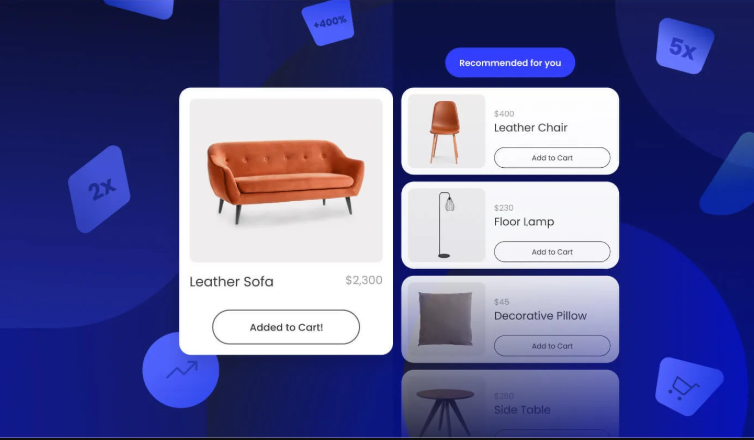
Building Effective Personalized Product Recommendations — Step-by-Step

Most brands today incorporate product recommendations into their e-commerce experiences, but very few do it effectively enough to achieve a meaningful commercial impact. The gap isn’t about the quality of technology or the complexity of algorithms, it’s about execution discipline. Strong recommendation strategies require structure, sequencing, and clarity to ensure effectiveness. When implemented correctly, they reduce friction, guide decisions, and increase both the conversion rate and AOV without resorting to discount pressure or aggressive persuasion.
This guide breaks down how to build an effective personalized product rec system step by step, from foundational decisions to advanced optimization techniques. Whether a brand is deploying recommendations for the first time or revisiting an existing approach, the steps below provide a practical roadmap for building, testing, and scaling personalized recommendations responsibly and profitably.
Why Personalized Product Recommendations Matter Now?
Today’s customers navigate an overwhelming array of product choices and increasingly shorter attention spans. They don’t want endless scrolling or complex filters they want simple clarity and help making confident decisions. Personalization accelerates the path to clarity.
What strong recommendation systems deliver
- Higher conversion and faster decision-making
- Larger cart sizes and multi-item orders
- Lower return rates due to better fit and product confidence
- Reduced time-to-purchase and lower abandonment
- More profitable orders without discount dependency
- Stronger repeat purchase behavior driven by trust
Personalization is no longer a “nice to have”; it is the foundation of competitive ecommerce.
See also: Architects Near Me: How to Choose the Right Local Expert for Your Home Project
Step 1 – Identify the Problem You Need Recommendations to Solve
Many brands begin by selecting technology instead of addressing the business problem. Effective recommendation systems solve measurable challenges.
Start with a clear objective
- Increase multi-item order volume
- Improve PDP-to-cart conversion
- Reduce checkout abandonment
- Lift attachment rate for accessories or add-ons
- Drive discovery across deep catalog categories
- Increase purchase frequency from existing buyers
Diagnostic questions to ask
- Where are users hesitating?
- What are the largest conversion leaks?
- What is preventing multi-item or higher-value orders?
- Where are customers abandoning in the journey?
The goal determines the strategy. Without clarity, optimization becomes guesswork.
Step 2 – Choose the Recommendation Types That Support Your Objective
Different recommendation formats serve different purposes. Using the wrong type at the wrong moment is one of the most common failures.
Core recommendation formats to consider
- Affinity-based recommendations – Products linked to browsing behavior and preferences
- Solution or bundle-based recommendations – Complete sets that solve the underlying need
- Add-on and accessory recommendations – Small, logical additions based on cart contents
- Premium upgrades or product tier alternatives – Higher value options guided by comparison
- Lifecycle or replenishment recommendations – Timing-based suggestions for repeat purchasing
- Recently viewed or complementary exploration modules – Helpful reminders for return visitors
Match type to intent stage
| Stage | Best recommendation type |
| Discovery | Affinity or guided exploration |
| Evaluation | Comparison, upgrade, alternatives |
| Cart optimization | Bundles, accessories, add-ons |
| Pre-checkout | Low-friction attachments |
| Post-purchase | Replenishment, cross-category expansion |
Step 3 – Decide Where Recommendations Should Appear
Placement is often more important than content. The most common mistake retailers make is displaying recommendations everywhere without a strategic purpose.
High-impact placement opportunities
- Homepage (return visitors, recently viewed, personalized hero)
- Category pages (curated sets, guided filters)
- PDPs (comparison, bundles, social-proof aligned guidance)
- Cart (accessories, add-ons, routine completion)
- Checkout (low-effort micro upsell)
- Post-purchase (replenishment or cross-sell follow-ups)
- In-app and email (timing-based contextual recommendations)
The best placements intersect with decision tension, not idle browsing.
Step 4 – Use Behavior Signals to Personalize in Real Time
Personalization does not require demographic or identity data. Real-time behavior is more powerful and privacy-safe.
Behavior signals that reveal intent
- Time on page/dwell time
- Repeat views of the same product
- Scroll depth and review engagement
- Add-to-cart and removal behavior
- Navigation patterns (category switching, backtracking)
- Price sensitivity behavior
- Device context (mobile vs desktop cognitive patterns)
Personalization examples powered by real signals
| Behavior | Recommendation Action |
| Long PDP dwell time | Add a comparison or a testimonial |
| Add-to-cart hesitation | Show a compatible accessory or reassurance |
| Viewing multiple variants | Fit or compatibility tools |
| Rapid add-to-cart | Full set or bundle offer |
| Return visitor | Recently viewed restart entry point |
Behavioral intelligence unlocks commercial influence.
Step 5 – Craft Messaging That Explains the “Why”
Recommendations fail when customers don’t understand the reason behind the suggestion. Framing is the difference between persuasion and support.
Strong recommendation messaging includes:
- Rationale: “Pairs well with your selection”
- Context: “Most customers who bought X also needed…
- Clarity: “Complete your setup”
- Confidence: Social proof or expert validation
- Value framing: “Upgrade for 30% more capacity”
Bad personalization feels pushy. Good personalization feels helpful.
Step 6 – Start Small and Test With Control Groups
Trying to personalize everything at once leads to chaos. The most successful teams launch incrementally and evaluate against clear baselines.
Testing structure
- Define hypothesis and expected outcome
- Implement a small surface (PDP, cart, etc.)
- Run clean control groups
- Measure revenue-based metrics, not engagement
- Scale only when performance is validated
KPIs that matter
- Incremental revenue lift
- AOV increase
- Multi-item order rate
- Attach rate for upsell or add-on
- Checkout conversion improvement
- Repeat purchase rate
A/B testing personalization is about business results, not interface activity.
Step 7 – Scale to Full Journey Orchestration
When the foundation is in place, recommendations can be expanded to include multi-surface coordination with automation.
Scaling components
- Unified logic across channels
- Real-time decisioning based on context
- Predictive modeling and next-best action scoring
- Cross-category and lifecycle orchestration
- Integration between on-site and CRM personalization
At scale, recommendations become guidance, not exposure.
Common Mistakes to Avoid
Many teams unintentionally introduce friction, overwhelm users, or personalize at the wrong time hurting conversion instead of helping it. Being aware of common mistakes upfront makes it easier to build a clean, effective recommendation program that drives results without damaging trust.
Avoid these pitfalls:
- Showing the same recommendations to everyone
- Assuming demographic equals intent
- Overloading users with endless options
- Over-personalizing too early in the journey
- Ignoring checkout sensitivity
- Personalizing without testing and controls
- Measuring clicks instead of revenue
A Practical Checklist to Guide Implementation
A practical checklist ensures that recommendation efforts stay aligned to real business goals and avoid unnecessary complexity. The following framework helps teams validate readiness, prioritize actions, and maintain disciplined implementation as they scale personalization across the user journey.
What strong recommendation programs always include
- Clear objective tied to revenue
- Intent-aware strategy by journey stage
- High-leverage placement prioritization
- Real-time behavior signals
- Transparent message framing
- Incremental rollout with experiments
- Outcome-based measurement
A structured approach compounds performance results.
Conclusion
Building effective personalized product recommendations is not about complex AI or massive technology stacks. It’s about understanding customer intent, designing for decision psychology, and sequencing improvements deliberately. When recommendations appear in the right place, at the right time, with clear rationale and behavioral alignment, they lift conversion, increase AOV, and strengthen long-term customer relationships.
Personalization succeeds when it feels like guidance, not pressure.
Support shoppers through clarity and context, and performance will follow.