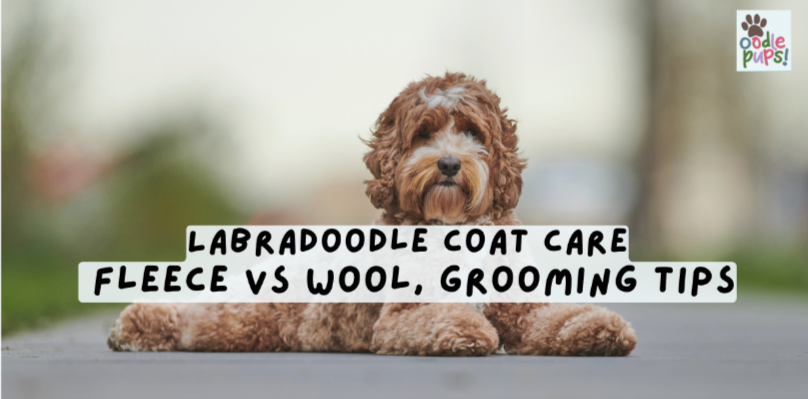
Labradoodle Coat Care: Fleece vs Wool, Grooming Tips

Australian Labradoodles have three main coat types, and each one needs different care. So, understanding these differences helps you choose the right coat for your family and know what grooming routine to expect.
At oodle pups, we breed multi-generational Labradoodles with fleece coats. The reason we focus on fleece coats is that they offer the best balance between manageable grooming and allergy-friendly properties for most Brisbane families.
However, Brisbane’s humidity makes coat care even more important for preventing mats. So, if you’re wondering which coat suits your family or how to keep tangles at bay, read this guide.
So that you can learn:
- The three labradoodle coat types in Australia
- Fleece vs wool grooming differences
- How to prevent mats from forming
Let’s start with the basics.
What Are the Main Labradoodle Coat Types in Australia?
Australian Labradoodles come in three coat types: fleece, wool, and hair. Each one looks different, feels different, and requires its own grooming approach.
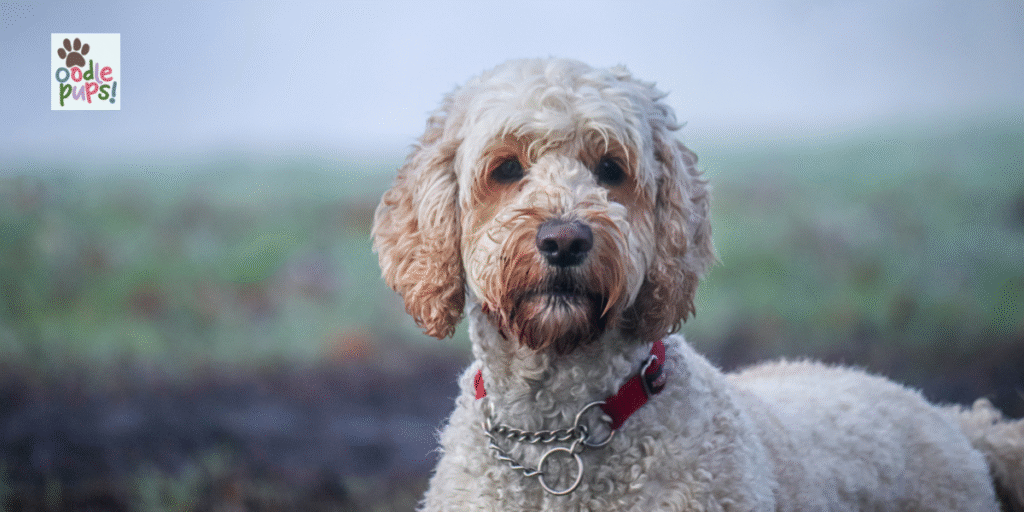
The fleece coat is what most people picture when they think of an Australian Labradoodle. But when comparing coat types, both fleece and wool shed minimally, unlike synthetic materials or synthetic fabrics used in cold-weather clothing.
Fleece Coat
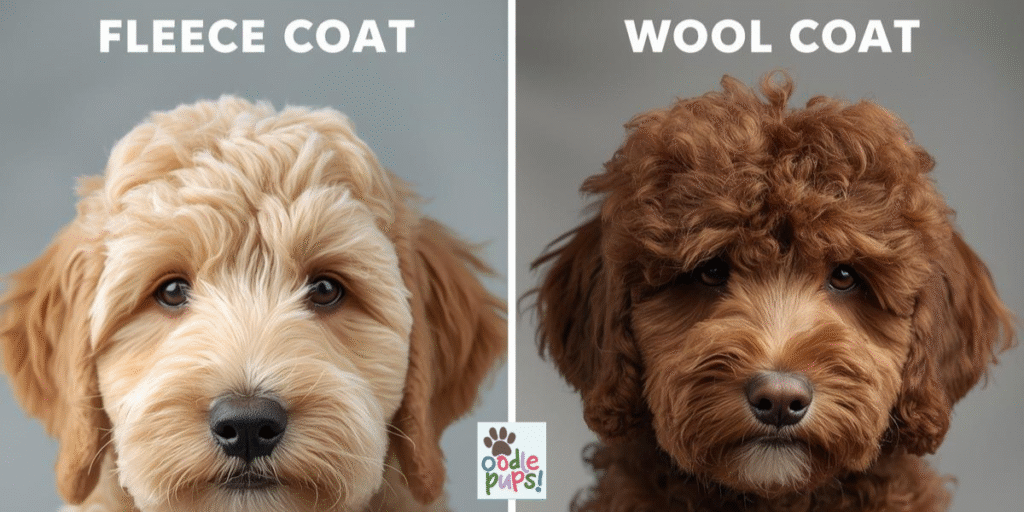
The fleece-textured coat has a soft texture similar of an angora goat. When you run your hand through it, you’ll feel silky waves or loose curls that flow and move. It creates a natural fabric feel that’s completely different from other synthetic fibers.
This coat hangs in tendrils from the dog’s body. If you notice a fleece-coated Labradoodle run, then you’ll see the coat ripple with each step, which creates discomfort for them.
On the other hand, some fleece coats have a straight, wavy look, while others show deeper curly fleece waves. Either way, they stay loose and never tighten into dense spirals like a Poodle’s coat would.
Wool Coat
The wool coat feels completely different from fleece fabric. When you touch it, you’ll notice a dense woollen feel, similar to lamb’s wool or natural fibre materials.
The ideal comparison between fleece and wool coat types: wool coats have looser spiralling wool that opens easily to the skin, but the curls are much tighter than wavy fleece. And the common advantage: unlike wet wool clothing that loses its shape, these coats maintain their structure.
Quick Tip: Due to loose hair staying trapped in the coat, you’ll need to brush this coat daily to prevent painful mats in this managed textured coat.
Hair Coat
The hair coat looks and feels like a typical Labrador Retriever’s fur. It’s straight or slightly wavy and feels coarser to the touch. Plus, it sheds in varying degrees throughout the year, similar to a double-coated breed.
Nowadays, you rarely see hair coats in multigenerational Australian Labradoodles anymore. The relief is that breeders can tell which puppies have hair coats by four weeks old. And these early-generation dogs usually end up with families who don’t need an allergy-friendly dog.
Frankly, hair coats need less grooming than fleece or wool coat types. But they’re not suitable for people with allergies or asthma.
Fleece vs Wool: Which Coat Type Suits Your Family?
Fleece coats suit busy families who want manageable grooming, while wool coats work best if you suffer from severe allergies. The fleece vs wool decision affects how much time you’ll spend with a brush each week.
So, let’s break down what each coat type demands.
Grooming Requirements
Fleece coats require brushing two to three times weekly to maintain the soft texture and natural fabric feel. You’re looking at maybe 15 minutes per session if you choose this.
Wool coats? That’s a different story. You’ll need to brush daily to prevent mats from forming in those tightly curled spirals. Plus, wool coats trap every single shed hair inside the curls.
This is similar to how natural fibre materials hold their structure. If you skip a day or two, those loose hairs tangle and create painful knots that pull at the skin.
Maintenance Time
Generally, fleece coats take less time than wool coats per brushing session. You can sit on the couch and work through the straight, wavy sections. That’s how the fleece fabric texture makes brushing easier than with wool.
Meanwhile, wool coats demand 30 to 40 minutes daily because of the dense wool layer. And you need to brush all the way down to the skin with your single coat breeds. That’s because surface brushing doesn’t work with wool coats. After all, the tightly curled structure hides mats underneath.
Allergy Considerations
When you choose wool over fleece, you get better containment of shed hair. However, wool coats don’t stop shedding. What happens is that shed hair stays caught in those forming spirals instead of ending up on your floor. And it makes them the ideal choice for severe allergies.
Finally, both coat types handle allergies better than synthetic materials, unlike polyester fleece used in winter clothing.
Verdict: Just remember that no dog is completely hypoallergenic, even though you search for allergy-friendly labradoodle coat types in Australia constantly.
How to Prevent Matting in Your Labradoodle’s Coat
You can prevent matting by brushing every day from skin to tip using a slicker brush. Mats form when loose hair tangles with the surrounding coat and tightens into painful knots.
And once they form, they’re hard to remove.
Let’s keep your dog’s coat tangle-free with these steps:
Daily Brushing Routine
Start brushing at your dog’s head and work towards the tail, brushing in sections. You need to get all the way down to the skin, not just skim the surface of the curly fleece or wool coat.
Also, focus on high-friction areas where mats form first. Those areas include behind the ears, under the collar, in the armpits, and where the legs meet the body. In short, areas that get the most movement throughout the day.
After the slicker brush, run a metal comb through the same area. If it glides smoothly from skin to tip, you’ve brushed properly. Otherwise, you’ve found a mat.
Professional Grooming Schedule
Book grooming appointments every six to eight weeks to maintain a healthy coat length. During Brisbane’s humid summer months, ask your groomer to keep the coat between one to two inches for better moisture wicking.
Professional groomers trim areas prone to matting while keeping your dog looking like a Labradoodle.
Puppy Coat Changes
Puppy coats transition to adult coats between six to twelve months. The adult coat grows through the puppy coat. And those loose hairs get caught in the new growth, creating tangles overnight.
We’ve seen this with both Pip and Rosie around eight months old. That’s why increase brushing to daily during this phase, or keep the coat trimmed short until the transition completes.
Meet Pip and Rosie’s Beautiful Fleece Coats
Finally, you know that understanding coat types helps you pick the right Labradoodle and know what grooming routine to expect. Typically, fleece coats are suitable for most families, while wool coats are recommended for those with severe allergies. And regular brushing keeps both types mat-free.
Still deciding between fleece and wool? We’re here to help you.At Oodle Pups, Pip and Rosie show how manageable fleece coats can be with the right routine. Ready to meet our girls and see their beautiful wavy fleece in person? Contact us to learn more about our current and upcoming litters.