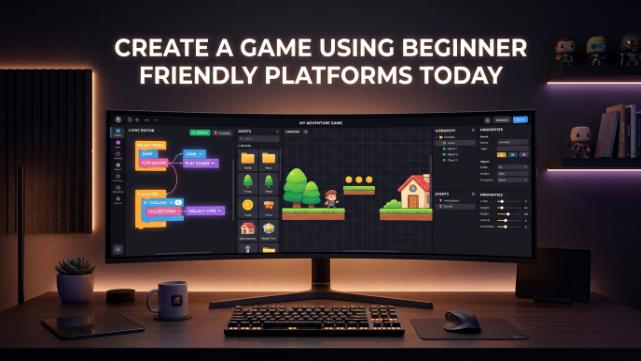
Create A Game Using Beginner Friendly Platforms Today

Have you ever wanted to make your own game but don’t know where to begin? Many people have fantastic ideas and are really creative – but they never create games because they think game development is too complicated and requires expert coding skills, or expensive tools.
The good news is that platforms for game development now exist that are suitable for beginners and let you turn your ideas into playable games. Among such approachable gaming is the Astrocade, a platform where novices can learn to make games without it being necessary to have many years of technical experience.
Whether you’re completely new to game development or just want a quick way to get the next idea out of your brain and into your hands to play, platforms like Astrocade are a good place to start. Agar chaho, to main aap k waste pure article bhi optimize kar dunga jisme “Astrocade” keyword ko SEO friendly way me 3-5 bar use kiya jayega.
Pick Easy Platforms
Choosing the platform is the first step when you want to develop a game. Software that is easy for beginners to use removes many technical hassles with UI for usage, templates, and visual editors. These allow you to be creative instead of worrying about complicated coding.
Some of the most common tools available to new developers include drag and drop game creators, visual scripting systems, and simple game engines. These types of platforms are suitable for creating 2D games, mobile apps and basic interactive films. Look at the features, tutorials and community support before you choose one.
See also: lPlanning Multiple Property Purchases? Use an SDLT Calculator to Save Money
Plan Your Game
All successful games begin with a definable concept. Plan your game story, characters, objectives and play style before launching a game builder. An easy plan keeps you organised, and you don’t get confused while making the game.
Do a rough outline of the game type (action, strategy, puzzle, etc), level design, challenges and user experience. For instance, a puzzle game will have other challenges than an adventure game, which will use storytelling and probably exploration.
Build Game Features
Once you have planned your concept, it’s time to get building. Platforms made for the novice offer various tools to enable users to add characters, backgrounds, animations, sounds and gameplay elements without having to do any complicated coding. These tools make it simpler for first-time creators to realize their creations of ideas.
You can use templates, game assets or visual tools to speed up the design of your project. A lot of platforms such as these give you the ability to customize controls, design maps, and include special effects. You can become more skilled and make more innovative projects with practice.
Test Your Creation
Testing allows you to catch problems and polish your game prior to launch. Play each level with care and make sure the controls, graphics and game play are OK. Small issues can affect the experience of the player, so it’s important to troubleshoot early.
Invite friends and other players to join you live and share their input. Outsiders may spot issues that you haven’t. It also sparks ideas for game mechanics and making the play more fun.
Publish Your Game
When you have finished your game, you may wish to let others play it. Many novice app builders provide ways to export your game or publish it on the web. Sharing your project allows people to play it and provides you with valuable feedback.
Submit your game to web sites, game communities, or app stores based on your platform. Capture screenshots, record videos or write descriptions to get your work noticed by more people.
Conclusion
Game development has become more accessible than ever, thanks to the growing number of user-friendly platforms that provide the essential tools needed to bring creative ideas to life. You don’t have to be an expert programmer to get started. With the right game engine, thoughtful planning, and some basic technical knowledge, you can turn an idea into a game that is entirely your own work.
The best way to improve is simply to begin. Start with a small project, experiment, make mistakes, and learn from each experience. You can even explore concepts inspired by a game like Mansion Merge, while ensuring that your finished game remains completely original. Every project teaches you something new, and the more games you create, the closer you get to becoming a skilled and confident game designer.
Frequently Asked Questions
Can beginners create a game without coding?
Yes, you can make games without coding through visual game builders and beginner-friendly platforms for novice game developers. These tools make creation easier with templates and basic options.
What is the easiest platform to create a game?
Which platform is simplest to use is subjective based on the user’s needs and wants, but a couple of platforms with drag-and-drop editors and tutorials are definitely the best options for beginners. They allow aspiring game developers to get started quickly.
How long does it take to create a simple game?
An uncomplicated game can be made in from a few days to weeks based on the scope, features, and your development experience. Starting with a small idea will let you finish faster.
Do I need artistic skills to make a game?
No, you don’t need to be a professional artist. A number of platforms provide prebuilt assets, templates and tools that allow you to create visually appealing games.
Can I earn money from a beginner-made game?
Indeed, some developers make a living by selling games through digital storefronts or platforms. But you typically need to learn, get better, market and make games people want to play to be successful.